

Take the Assessment Contact Us (801) 489-3311 View Testimonials
Subscribe to our Newsletter
Discovery Ranch is authorized under Federal law to enroll International students.
SEVIS I-20 approved
 

Salman Kahn, Discovery Ranch and Best Learning Practices

September 26th, 2012

Salman Kahn has been dubbed “the world’s teacher.” As inventor of YouTube’s “Kahn Academy,” he’s created more than three thousand videos that provide free tutoring for math and science. More than 350,000 students have viewed his on-line lessons.

It started quite by accident in 2004 when Kahn began tutoring his cousin through on-line learning. People who saw the lessons urged him to videotape them and put them on YouTube. His relaxed presentation and clear explanations made the free tutorials an almost instant hit.

Salman Kahn isn’t a teacher by training but he’s convinced there’s a better way to learn. In an article in the July 9, 2012 issue of Time magazine, reporter Kayla Webley writes, “In Kahn’s view, there’s no need for students to be divided into grades by age. Instead, they should learn at their own pace, moving on to the next lesson only when they have mastered the concept before it.”

Webley continues, “Kahn says the issue isn’t the computers; it’s how we’re using them. The traditional classroom model essentially forces educators to teach to the middle. High achieving students aren’t challenged and low achieving students are made to move on to the next concept before they’ve mastered the previous one. “

Kahn argues teachers should convert time spent “teaching to the middle” to individual, one on one time that is spent giving students the personalized learning they need. He calls the approach a “flipped classroom.”

As Time reports, Kahn says, “In the ideal classroom, the teacher is either spending all of their time doing deep interventions with students on a one-on-one basis or facilitating true interactivity – labs, simulations, projects.”

Sound familiar?

“That’s us! That’s Discovery Ranch,” says Victoria Fielding. The Discovery Ranch Academic  Director practically shouts with excitement.  “That’s exactly why we focus on individual learning. We can use a variety of teaching tools to help students learn at their own pace and really understand what they’re learning.”

Fielding says the Kahn videos are another supplemental tool Discovery teachers are incorporating in their lesson plans. She says the videos provide greater depth than textbooks alone provide.

“With small classes we really can teach children on whatever grade level they happen to be on. We meet them where they’re at and help them achieve understanding and competency. Whether that means a student spends two weeks on a concept or two hours, there is no ‘teaching to the middle’ at Discovery Ranch.”

Is Kahn just a flash in the pan or is he really onto something when it comes to revolutionizing education? It depends on who you ask. But the phenomenal success of his free YouTube videos is being funded, in part, by the likes of Bill Gates, who, according to some sources, uses the videos to help teach his own children.

According to Time, Khan’s goal is to grow his YouTube channel into a non-profit that can support all aspects of the learning process.

Victoria Fielding’s goal is equally ambitious. “I want every student at Discovery Ranch to discover their own learning potential. I want them to see academic success really is within their reach.”

Read the Time magazine article at: http://www.time.com/time/magazine/article/0,9171,2118298,00.html


Print Friendly

Best Help for a Troubled Teen

May 7th, 2012

Alexandra’s Story


“She was seventeen and a half and we felt that if we didn’t do something soon she was not going to have any chance of becoming a happy, healthy adult.”

Dan from Connecticut recently talked about his family’s experience at Discovery Ranch.

“We’d had behavior problems in her sophomore and junior years of high school,” he recalled. Alex had been involved in a serious car accident but even that hadn’t been enough to make her reconsider her choices.”

“We’d been working with a therapist for a couple of years. She referred us to an educational consultant,” Dan recalls.

The consultant considered Alex’s interests and struggles and recommended Discovery Ranch and one other program. Dan visited both programs and picked the Ranch.  While he would have preferred a program closer to home, Dan said after seeing the Ranch he felt confident that if Alex was going to be successful, DR would be the place for that to happen.  He knew his daughter would love the horses and calves the moment she saw them. But something else impressed him as well.

“The co-ed aspect of it was big,” he explains. “The other program was all girls. Clearly, part of our issue was Alex’s inability to interact appropriately with boys. I liked very much the idea that there were boys on campus. Boys and girls are separate for a lot of the time but not all the time. That was a skill she’d be able to work on there.”

The Ranch’s single gender hybrid model keeps boys and girls from having an interaction until there is a therapeutic reason to allow them to mingle. Then all activities are carefully structured and supervised.

Dan also recognized that Alex’s therapy would be coming from a variety of people – something he felt would prevent her from becoming bored. “She worked with one person on individual therapy but another on equine, another on residential issues and still another for drug & alcohol,” he says.  “The therapists communicated really well with each other.”

Dan also feels Alex’s therapist was a good fit for their family as a whole. At first he says he was concerned about not being able to select a specific therapist. But Ranch staff promised him that if, after a few weeks, he didn’t think it was a good fit they could change therapists.

Dan said he never needed to request a change. Alex connected well with the therapist, as did the rest of the family.

He does believe, however, that changing from regular telephone counseling sessions to Skype sessions made a big difference in the effectiveness of their family therapy. He says being able to see Alex’s reactions to the discussions was “huge.”

“We knew we were making progress within the first six weeks,” he recalls. Alex enrolled November 15 and Dan didn’t see his daughter until Christmas Day. “We’d spoken to her on the phone but didn’t see her,” he says. “In the first five minutes of our visit you knew that there was progress.”

Dan says before Alex’s therapy at the Ranch she and her mother had a tense, disrespectful relationship. There was none of that at Christmas. “Her reaction to her mother was great,” he says.

Six months into her therapy at the Ranch, Alex wanted to know if she could stay past her 18th birthday. Dan says when his daughter returned to the Ranch after a home visit she wrote her parents a long letter explaining why she didn’t think she was ready to return home.

The family discussed it and agreed. “She wanted to make at least Level 4. She stayed 60 days past her 18th birthday.”

Alex graduated from the Ranch in 2011, having rediscovered her interest in academics, earning an “A” average for her senior year, and re-taking the SAT exam while at DR with dramatically better results than she’d had at home. She plans to attend college inUtahthis fall. In the meantime, she’s had a steady part-time job and has resumed riding horses English style after learning how to ride Western at DR. She’s taking a college course via the Internet and attends Narcotics Anonymous meetings four nights a week.

Dan says the Ranch’s introduction of off-campus NA meetings made a huge difference for Alex.  When she returned home she knew she wanted to continue her involvement with an NA group. “Within two weeks she’d found a group, a sponsor, and a new set of friends who are all clean,” Dan says. Alex has even served as the meeting chairperson for two of the NA groups.

Overall, Dan says, he’s thrilled with Discovery Ranch and what therapy there has done for Alex. For the first little while he admits he struggled with the thought of sending Alex away. He says he sometimes felt he had failed as a parent because he had to seek outside help. “We had tried everything that we could try,” he says. “We owed it to her to try something completely different.”

“For the first 15 years of her life she was a great kid and a happy kid. Then she went through a couple of years where she was never happy. I think she’s now learned what truly makes her happy and unhappy, and how her own behavior impacts her own long-term happiness.  That is a huge change, and it’s had a very favorable impact on how we interact with each other.”

Print Friendly

Best Way to Help Troubled Teen Change

May 4th, 2012

“If somebody had told me two years ago we’d be in this situation, I never would have believed it. To have come back so far is truly remarkable.”

This family agreed to share the story of their troubled teen if we would agree not to disclose the family’s identity. Their son, B., struggled with grief, anger and anxiety. He eventually turned to drugs as he tried to make sense of his life.

B.’s parents divorced when he was younger and when his mother passed away he went to live with his father and step mom. His father, HB, says that at first his son seemed to be handling the situation well. But as time went on B. became angry and defiant.

“We had him in various counseling situations over three years and he didn’t respond very well” his father recalls. “We changed schools but as his grades declined so did his self image and he eventually fell in with the wrong crowd. This led to a decline in self image and motivation and led to more bad decisions. His grades went from A’s to failing. We attempted military school and tried mandatory counseling but he wasn’t receptive and just shut down which did not help him get any better.”

A mental health evaluation at a local hospital indicated B. suffered from depression and anxiety. The family decided a wilderness program might be appropriate and arranged to send B. to an east coast program.

While B. was in wilderness therapy his counselor recommended B needed more time and therapy and that he not be returned to his former environment. Immediately his parents began looking for the next therapy step. They hired a local educational consultant who worked with the family and B’s wilderness program to helped them better wade through the reams of information and make sense of what the options were. Their educational consultant then recommended five or six programs that met B’s immediate next step needs and that they should consider. B’s father started researching and contacting the programs. Eventually, his parents. narrowed their search to three programs, which B’s father visited personally.

Of the 3 programs, Discovery Ranch he said, felt to me like it was the best fit for our situation.

“You have to picture your child being there without you,” B’s parents advise other parents to visualize. “Could you picture them being here? Growing and learning here? Being taken care of here?” He said making sure the people trusted with your child actually care about them is as important as making sure the problems your child struggles with will be properly addressed. “Is there good, caring staff and safe surroundings?” he asks.” Do they connect with you on a personal level?” “Do your research to be sure….know the facts, but in the end a balance of analysis and heart is required for peace of mind.”

HB said he didn’t realize how important that part was until he was actually visiting the ranch. He felt B. needed a caring environment that would also stimulate his curiosity about the world around him – one that could also provide a more natural, “wholesome,” teenage life for a year.

“That was the criteria I had in the back of my mind,” he recalls.

He also had high academic expectations. He was hoping B. could make up more than a semester of high school so that he could graduate and enter college on time. HB admits he was skeptical about a self-paced academic program like the one offered at DR.

“Most of the teachers are part time so I thought there would be a lower quality of education,” he recalls. “The whole process of self-paced didn’t feel quite right to me. It didn’t seem it was designed to really develop the kids.”

What he found was just the opposite. B’s parents feel the self-paced approach helped B. to develop more independent study habits. His dad says, “In my mind, that prepared him more for college than a traditional classroom approach would have by spoon feeding him.”

B. made up his lost semester and also began taking advanced coursework. If parents choose, they can pay an additional fee for local college students to tutor their child. HB. says he’d prefer DR just raise tuition by $200 and include the tutoring as part of the academic program at the Ranch. He did use tutors however, to reinforce preparation, provide content and help B build self confidence. “The tutors were very valuable. Not just academically, but as role models and just sounding boards!” he said.

B’s parents also appreciated the fact there was good communication between the therapy team and the academic team. “They were on the same page,” he says. In fact, residential staff, teachers and therapists met once a week to discuss B.’s progress and needs in all three areas. HB says “The information sharing was good.”

After 14 months and again with the help of their educational consultant and a similar process, B. was transitioned to a boarding school where he is on the honor roll and a member of the National Honor Society. He applied to eleven diverse universities both public and private. He has been accepted to nine of the eleven with scholarships to the majority of them. He is in the process of making his final decision.

HB. says it wasn’t solely the depth of therapy alone but the experiential program as a whole that helped his son get back on track. And he has some advice for other parents of troubled teens:

“Look at a variety of options. It will make you feel better about the decision that you eventually make. Stay involved but you have to let go too. Let these people do what they do best. We do understand that this is a journey and there are challenges ahead. But, we feel we are all better aware and equipped to confront them head on and support B as he grows and matures

Print Friendly

“Like” Discovery Ranch and You May Win

March 31st, 2012

You may have hated us, then loved us, but have you “liked” us? In honor of our new Facebook page, www.facebook.com/DiscoveryRanch, we’re giving away some e-readers.

To register for the contest, just like us on our new page and then tell us here, on our blog, why you like Discovery Ranch.

Here are the official contest rules:

1.  No purchase necessary to win.

2.  Post your blog entry here between April 1, 2012 and May 1, 2012.

3.  Winners will be notified by e-mail in early May.

4.  Employees of Ascent and their families are not eligible to win.

Good luck and thanks for sharing your Discovery Ranch story!

Print Friendly

Why Struggling Teens Need a Single Gender Hybrid Therapy Environment

February 7th, 2012

Should boys and girls receive therapy in a setting that treats both genders? Well, yes and no. At Discovery Ranch, our program is a single gender hybrid. It treats boys and girls in separate therapy environments until there’s a therapeutic advantage to letting them interact.

Here’s an example of how this single gender hybrid approach benefits struggling teens. (We changed the student’s name to protect her identity.)

Janet always had to have a boy in her life and that had led to some pretty poor decision making. She was willing to do anything to feel liked by boys. In her therapy at the ranch, she’d been on a restricted protocol that allowed her no interaction with boys. In therapy sessions, she said she was sure now that she saw her thinking errors when it came to her behavior around boys. It was all just lip service.

Janet thought she could fool her therapist and Discovery Ranch staff. She tried to leave sexually explicit letters where male students would find them.  Of course, her plan didn’t work. And it gave her therapist a new opportunity to help Janet realize how much time and effort she was wasting in her life trying to get attention from men.

Her therapist noted, “Janet is a hollow shell. She doesn’t even dare look at herself. Her entire self-worth comes from external sources – boys especially. Being able to discuss her behavior as it happened, but still within a safe, therapeutic setting, gave us the environment she needed to build awareness.”

Discovery Ranch is not intended to protect students from their emotions. The hybrid approach is deliberately designed to help students have an emotional experience in place where they can safely work through those emotions.

As one therapist noted, it’s a little like planting trees in a protected biosphere. Scientists realized that without the wind, biosphere trees simply didn’t develop a strong enough root system to help them survive and thrive.

Discovery Ranch’s hybrid approach gives students a chance to face their emotions and master them.

Print Friendly

Equine Training Pays Off for Struggling Teens

January 27th, 2012

Trail Ride Jan. 2012

January in Utah is usually snowy and cold. But this year we caught a break from Mother Nature. With little or no snow up Diamond Fork Canyon we took the opportunity to take our advanced equine students on a two hour trail ride.

This ride was extra special because the horses are “graduates” of our colt training program. We’ve raised these horses practically since they were born. Teaching the horses to trust us and to learn how to be good saddle horses is a therapeutic exercise for our students. It was very rewarding for our students to see how much progress these horses have made to get to the point where they can be safely ridden.

The students themselves have made a lot of progress. They had to pass a riding test and an education test in order to be eligible for the advanced equine group. We call it advanced equine but it’s actually advanced relationships. We use this experiential activity as an opportunity to teach higher relationship principles like honesty, respect, and responsibility. The students understand we have higher expectations for them because of the trust required to earn privileges such as the trail ride. by Jerry Christensen, Equine Director

Watch the video: To see the colt training process and the therapy that goes with it click on www.discoveryranch.net/videos  “Colts & Kids”

Print Friendly

Discovery Ranch Welcomes New Troubled Teen Therapist Lexi Monroe

January 6th, 2012

Lexi Monroe has joined the therapy team at Discovery Ranch. Lexi has more than six years experience and is especially effective working with girls who struggle with abuse or trauma. Lexi previously worked at an oiutpatient treatment center, a secure lock-down treatment center, and an accute in-patient hospital. She’s especially happy to be working at the ranch because she’s grown up around horses. The daughter of a large animal vet, Lexi understands first-hand difference animals can make in helping people work through their problems.

Lexi is a Licensed Professional Counselor and a Licensed Substance Abuse Counselor. She specializes in treating adolescent girls. Welcome, Lexi!

Print Friendly

Struggling Teen Girls Thrive in Ranch Setting

October 19th, 2011

When parents and consultants think of sending a troubled teen to Discovery Ranch, they often see it as a better fit for boys.

Not so, says Jerry Christensen, Experiential Director at Discovery Ranch. “Girls aren’t as soft in this environment as people may think,” he says. “They’re willing to get dirty and sweaty and work hard to do the things you need to get done on a ranch.”

Jerry admits he was surprised himself at how willing the female students were to get down to the nitty gritty and “get ‘er done.”  He says, “They’re willing to roll up their sleeves and get to work. They really enjoy it and want to do it.” In fact, he adds, the girls often seem intent on proving they’re every bit as capable at running a ranch as the boys are. According to Jerry, in many ways they’re better.

“It’s not that the girls are better leaders, but organizationally the girls are stronger,” Jerry explains. “Even when we’re just stacking hay, the girls are more conscientious.”  Jerry adds Discovery Ranch girls also seem to take more pride in their work. “The mixing rooms where we make the formula for the calves are cleaner and better organized,” he says. Female students also tend to take better care of tools and equipment, returning them to proper storage areas. “They do better in most leadership positions because of how much more they seem to care about the animals.”

Leadership isn’t the only area where Ranch girls shine. “From a care giving standpoint, they’re much better care givers,” Jerry says. “We have boys that are compassionate but the don’t seem to have the same nurturing instinct when it comes to the animals’ health. The girls seem to instinctively have the ability to do what needs to be done and they put the time and effort into it.”

Every Discovery Ranch student is given a calf to raise as soon as they arrive at the Ranch. Students are responsible for feeding and watering in the animal, as well as cleaning its pen and monitoring any health concerns.

Equine activities are also mandatory for both sexes. Students are required to do “ground work,” or experiential activities that do not involve riding. As students progress through their therapy they have opportunities to participate in advanced horsemanship, or riding activities, if they choose.”Our horsemanship  program very much dominated by girls,” Jerry notes. “Some have ridden before the ranch, some haven’t ridden at all. They’re more passionate about it.” 

One of Jerry’s favorite experiences is watching girls who may be timid or shy overcome their fear and set boundaries in the corral for a thousand-pound horse. “It’s really empowering when a girl can set boundaries for a big horse. She’s learned she can set boundaries for a boy or anyone else in her life.”

Caring for the calves and working with horses gives girls a visual representation of some of their own struggles. Girls dealing with trust issues see those struggles played out in the corral as they try to win the trust of the horses they work with.

“Girls gain a lot of self esteem and benefit from taking care of animals and learning how to set limits, Jerry says.  “Just because it’s a ranch and work can be tough and challenging doesn’t mean it isn’t a great therapy venue for girls.”

Print Friendly

Learning in a Single Gender Classroom

September 16th, 2011

CNN recently profiled an Indiana high school where students, teachers and administrators agree that single gender classrooms make it easier for students to focus and succeed. Here is their report:  http://ht.cdn.turner.com/cnn/big/bestoftv/2011/09/14/wm-nn-singe-sex-classes.hln.ipad.qtref.mov

Print Friendly

Struggling Teens Cowboy Up for Rodeo

July 28th, 2011

Rodeo 2011

The 3rd Annual Discovery Ranch Rodeo was held on June 24th. Our Rodeo announcers were Kendall and Brendan. Do I need to say more?

Jerry and Jake were the judges. It was a perfect day for a rodeo. The stands were filled to capacity, the smell of food cooking on the BBQ was in the air, the judges were mounted on the finest horses in the country -  even John Wayne would be envious.

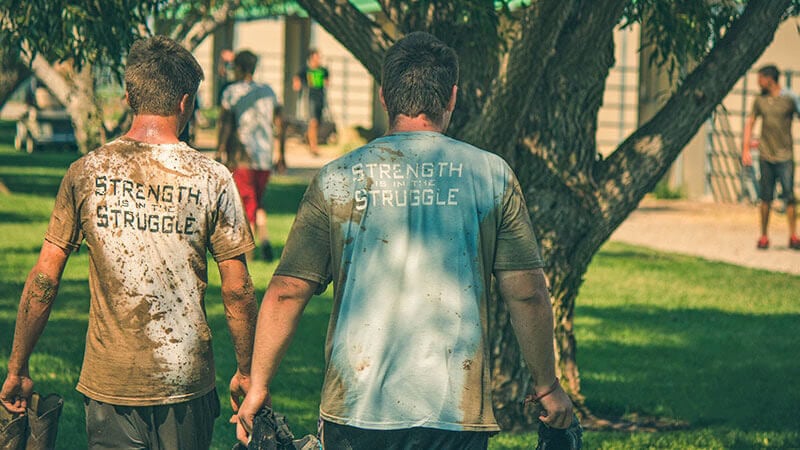
The American flag entered the arena and the national anthem was sung with pride/ Then the announcement was made, “Let the Rodeo Begin,” and the crowd went crazy. The contestants entered the arena riding the finest horses west of the Mississippi, dressed in DR (“The Strength is in the Struggle”) apparel. The sight took our breath away.

There were 3 event’s: break away, barrel’s,  and saddle bronc riding - which was not a planned event but it did occur. With the exception of a few minor injuries, the rodeo was a success from everyone’s point of view. Our Grand Champion was Lex, second place was Manny and we had a tie for 3rd with Brendan and Hannah. All four participants earned a trail ride with Butch Cassidy  and the Sundance Kid, affectionately known as Jerry and Jake.  by Leslie Giles, Residential Director

Print Friendly

Sister Companies

Part of the Redcliff Ascent Family:

Oxbow Academy

435.436.9460

Help and healing for adolescent boys who struggle with sexual dependencies.

RedCliff Ascent

800.898.1244

The industry leader in wilderness therapy

Discovery Academy

801.374.2121

The premiere therapeutic boarding school experience for academic and therapeutic excellence

Medicine Wheel

800.898.1244

Wilderness therapy for young adults 18 and older struggling with life and substance usage.